

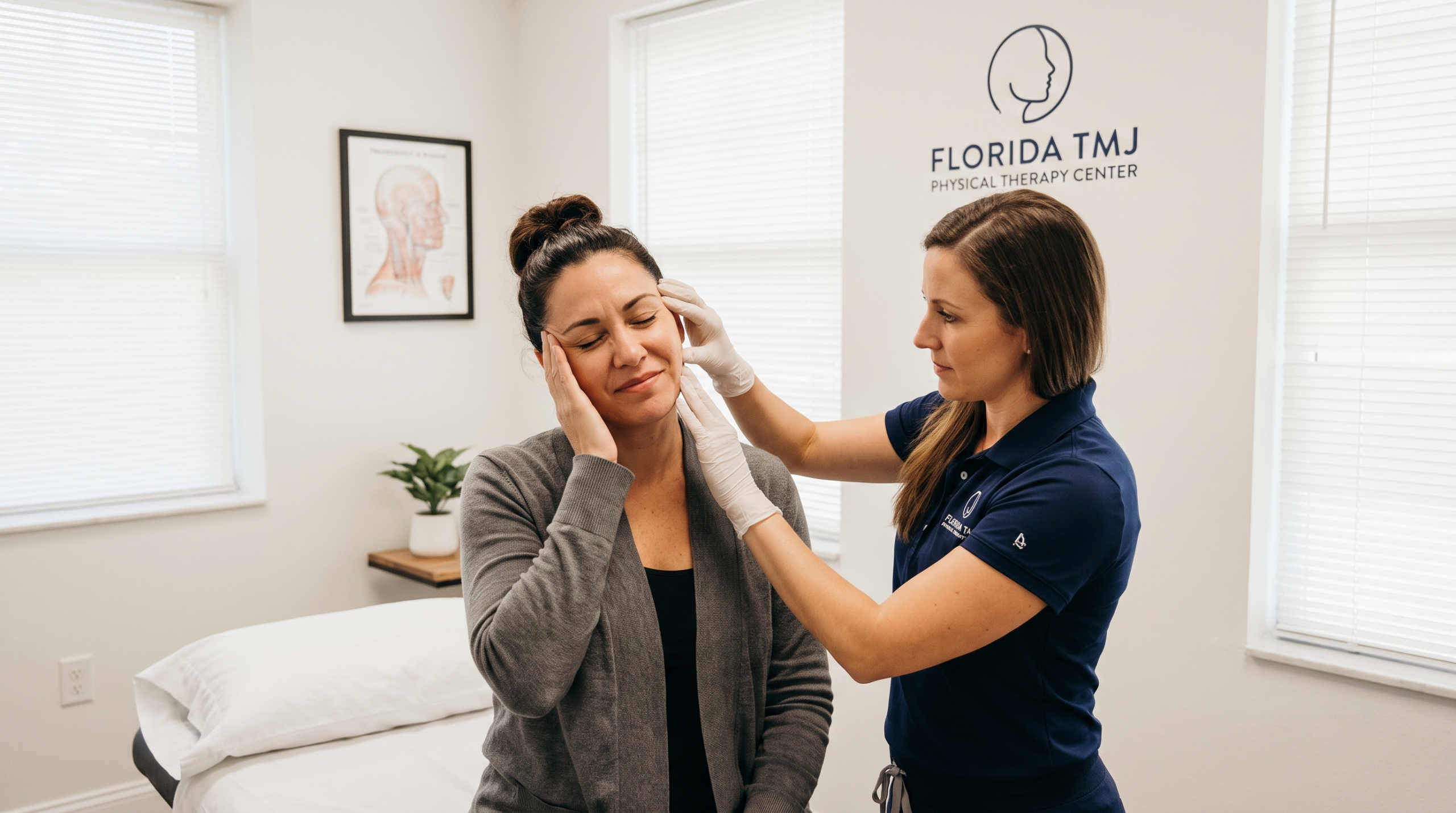
5 Effective TMJ Headache Relief Methods
You’ve taken the pain relievers. You’ve tried to sleep it off. And still, the headaches come back, sometimes daily, often behind your eyes or wrapped around your temples. If you’ve also noticed jaw clicking, tightness when you wake up, or soreness when you chew, there’s a good chance your headaches aren’t starting in your head at all. They’re starting in your jaw, and TMJ headache relief starts with treating that source directly, not just the pain it causes.
TL;DR: TMJ headaches often come from tight, overworked jaw and neck muscles, not from “just stress” or unexplained migraines. Physical therapy, including dry needling, manual therapy, and postural correction, targets the actual source of the pain rather than masking it. A hands-on evaluation is the fastest way to find out if your headaches are jaw-related.
Learn more about our headache management approach.
Could Your Headaches Actually Be Coming From Your Jaw?
A TMJ headache is head pain caused by dysfunction in the temporomandibular joint or the muscles that move it, most often the temporalis, masseter, and lateral pterygoid. It typically presents as pressure at the temples, behind the eyes, or at the base of the skull, and it often coexists with jaw clicking, tightness, or difficulty chewing.
Many patients spend months treating these headaches as migraines or tension headaches with little relief, because the underlying cause, muscular strain around the jaw joint, was never addressed. Effective treatment of TMJ headaches starts with identifying whether jaw dysfunction is present in the first place, which is why Dr. Mora’s evaluations specifically screen for jaw involvement in patients whose headaches haven’t responded to typical treatment, checking jaw range of motion, muscle tenderness, and how the neck and jaw move together.
The referred pain pathway matters here: the lateral pterygoid and temporalis can refer pain to the temple and behind the eye through a mechanism distinct from a typical tension headache, which is part of why this connection so often gets missed. The upper cervical spine (C1–C3) also shares nerve pathways with the trigeminal nerve, so jaw and neck issues frequently overlap and need to be evaluated together, not separately.
1. Physical Therapy: A Core TMJ Headache Treatment
Physical therapy is considered a first-line, conservative TMJ headache treatment because it addresses the muscular and joint mechanics causing the pain, rather than only relieving symptoms. A physical therapist trained in TMD evaluates jaw mobility, muscle tension, and posture to build a targeted plan.
At Florida TMJ Physical Therapy Center, treatment typically combines manual therapy, targeted stretching, and jaw-strengthening exercise. Dr. Mora’s evaluation also looks beyond the jaw itself, since restricted neck mobility or forward head posture can place ongoing strain on the same muscles that trigger headaches. This full-picture approach is part of what distinguishes TMJ-specialized physical therapy from general headache management.
2. Dry Needling for Jaw Muscle Tension and Trigger Points
Dry needling is a technique using thin, sterile needles to release trigger points, tight bands of muscle that refer pain to nearby areas, including the temples and skull base. It differs from acupuncture in that it’s based on Western neuromuscular anatomy, not traditional Chinese medicine.
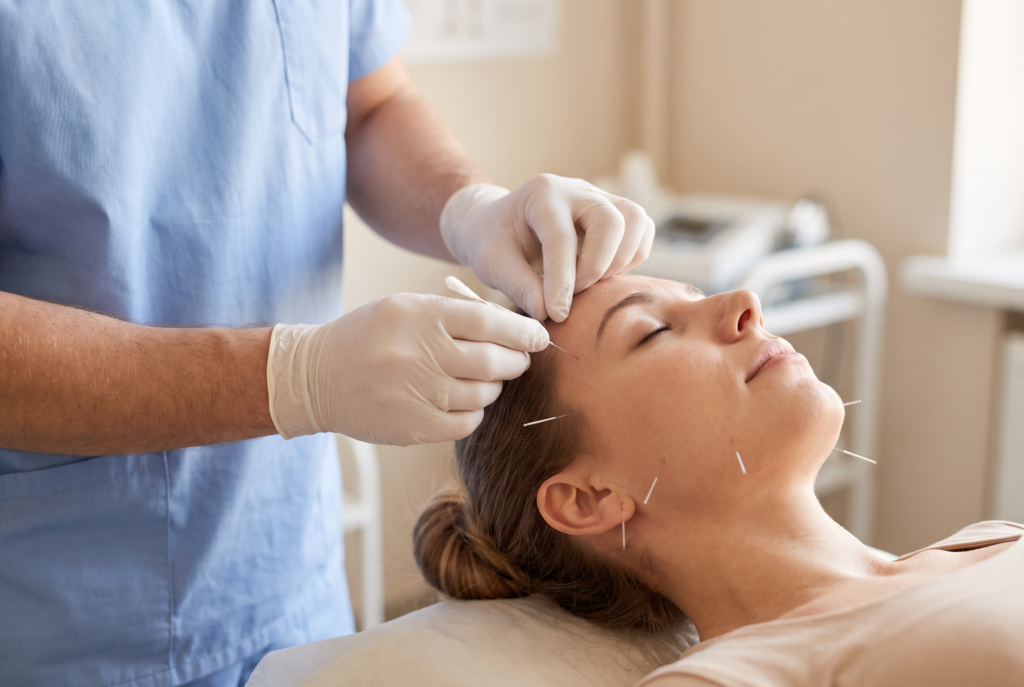
For TMJ headaches, common target areas include the masseter, temporalis, and lateral pterygoid. Because the lateral pterygoid sits deep along the inside of the jaw, an intraoral (buccal) approach is sometimes needed to reach it directly, something external massage or a night guard cannot accomplish on its own. Many patients notice improved jaw mobility and reduced muscle tightness following treatment.
3. Manual Therapy & Myofascial Release for TMJ Headache Relief
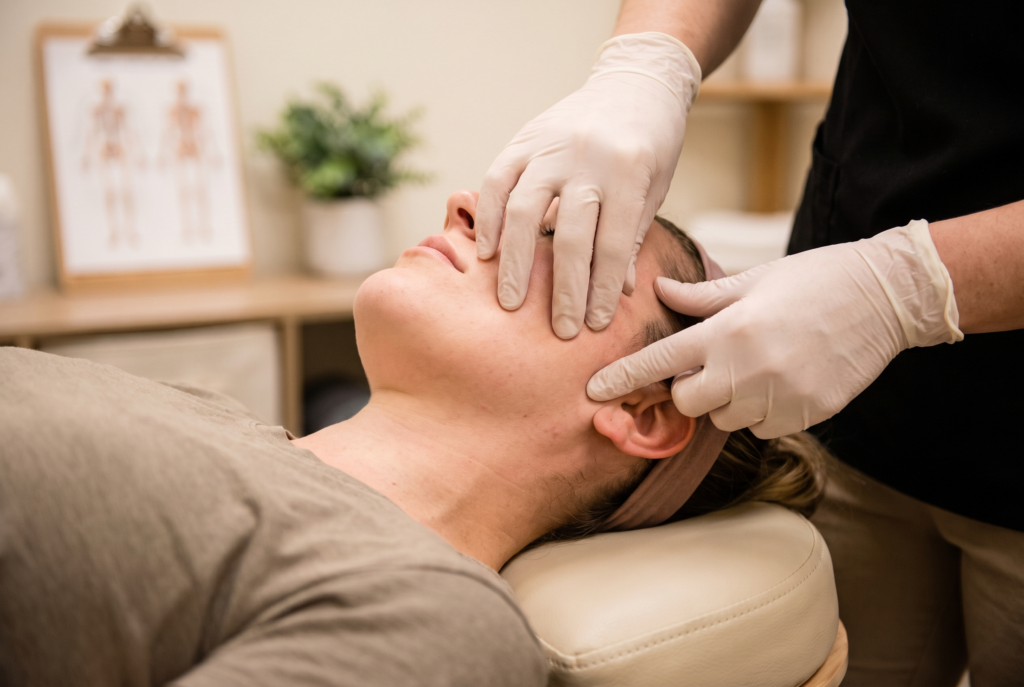
Manual therapy and myofascial release are hands-on techniques that reduce tightness in the jaw, face, neck, and shoulder muscles that commonly contribute to TMJ headaches. By improving blood flow and mobility in these tissues, this approach helps calm the muscle tension that feeds into headache frequency.
Because TMJ dysfunction rarely stays isolated to the jaw, treatment often extends to the neck and shoulders as well. Restricted movement in the cervical spine places extra load on the same muscles involved in jaw function, so releasing tension in both areas together tends to produce better results than treating the jaw alone.
Contact our Pembroke Pines office to schedule an evaluation
4. Posture, Sleep Position & Ergonomics: An Overlooked Factor
Posture plays a bigger role in TMJ headaches than most people realize. Forward head posture, whether from desk work, phone use, or sleep position, increases strain on the muscles connecting the jaw, neck, and skull base, which can intensify jaw tension and trigger headaches over time.
Common contributors include slouching at a desk, tilting the head forward to look at a screen, and sleeping on the stomach, which puts direct pressure on the jaw. Adjusting screen height to eye level, supporting the neck properly while sleeping, and being mindful of head position throughout the day are simple starting points, though a full postural assessment identifies the specific patterns feeding into each patient’s symptoms.
5. Stress, Clenching & Grinding: Breaking the Cycle
Stress is one of the most common triggers for TMJ dysfunction and related headaches. Under stress, many people clench their jaw or grind their teeth without realizing it, often during sleep. Over time, this repeated strain overloads the jaw joint and surrounding muscles, feeding a cycle of tension and pain.
Breaking this cycle usually involves a combination of approaches: relaxation techniques to calm the nervous system, jaw awareness exercises to interrupt clenching during the day, and, when needed, hands-on treatment to release muscles that are already overworked. A simple starting exercise: rest your tongue gently on the roof of your mouth just behind your front teeth, let your jaw hang loose, and keep your lips closed. Holding this position periodically throughout the day can help retrain the jaw out of a clenched default.
How to Get Rid of a TMJ Headache for Good
Lasting TMJ headache relief comes from addressing the combination of factors causing it: muscle tension, joint restriction, posture, and clenching habits, rather than treating any one in isolation. Patients searching for how to get rid of a TMJ headache often find that a personalized evaluation outperforms generic stretches or over-the-counter remedies for recurring symptoms.
At Florida TMJ Physical Therapy Center, Dr. Mora builds each plan around what her evaluation finds, which may include manual therapy, dry needling, postural correction, and take-home strategies for managing clenching and grinding. The goal is fewer headaches over time, achieved by treating the mechanics behind them.
Specialized TMJ Physical Therapy vs. Other Approaches
| Approach | Addresses Muscle/Joint Cause | Non-Surgical | Personalized to Jaw & Posture | Typical Timeline |
| Specialized TMJ Physical Therapy | Yes | Yes | Yes | Varies by evaluation |
| General Physical Therapy | Partial | Yes | Limited (not TMJ-specific) | Varies |
| Pain Medication Alone | No | Yes | No | Temporary symptom relief only |
| Night Guard / Appliance Alone | Partial (bite-focused) | Yes | Limited (dental focus, not muscular) | Varies |
If your headaches keep returning and nothing seems to explain why, your jaw may be worth a closer look. Dr. Evelyn Mora, PT, DPT, offers thorough, non-surgical TMJ headache treatment evaluations at Florida TMJ Physical Therapy Center in Pembroke Pines, FL, designed to find the actual source of TMJ headache pain rather than just managing the symptoms. Schedule your TMJ headache evaluation today and take the first step toward understanding what’s really behind your headaches.
Frequently Asked Questions About TMJ Headache Relief
Yes, and it happens more often than most people expect. The temporalis and lateral pterygoid muscles refer pain directly to the temple and behind the eye when they’re strained, a distinct mechanism from a typical tension headache.
Look for overlap: jaw clicking, tightness in the morning, or fatigue when chewing alongside the headache. If the pain shifts or worsens with jaw movement or clenching, that overlap usually points back to the TMJ.
Both can play a role depending on the cause. Physical therapy addresses the muscular, fascial, and joint-mobility components of TMD, while a TMJ dentist addresses structural bite alignment; many patients benefit from evaluation by both.
For muscle-driven TMJ headaches, yes. It targets trigger points in the temporalis, masseter, and lateral pterygoid responsible for referring pain into the temple and skull base.
Yes. Forward head posture increases strain on the muscles connecting the jaw, neck, and skull base, which can intensify jaw muscle tension and contribute to headache frequency. Postural correction is a standard component of TMJ headache treatment.
That depends on how much muscle and joint involvement is present, and whether posture or clenching habits are still feeding the cycle. It’s best answered during the evaluation itself rather than estimated in general terms.