How TMJ Pain Treatment Works With Physical Therapy
If you’ve been dealing with jaw pain, tightness, or clicking for weeks or months, you’ve probably already wondered whether anything will actually fix it, or whether you’re just stuck managing it indefinitely. That question matters, because TMJ pain treatment looks different depending on what’s actually driving your symptoms, and setting realistic expectations from the start makes a real difference in how satisfied you’ll be with your results.
TL;DR: Physical therapy isn’t always a permanent “cure” for TMJ pain, but it’s highly effective at reducing symptoms and restoring jaw function for most patients. Results depend on the underlying cause and how consistently treatment recommendations are followed. An evaluation is the clearest way to find out what’s realistic for your specific case.
Can Physical Therapy Cure TMJ Pain? Setting Realistic Expectations
TMJ disorders don’t have a single universal cure, because the underlying cause varies from patient to patient, ranging from muscle tension and clenching to joint-level changes like disc displacement. Physical therapy can significantly reduce or resolve pain for many patients, but the honest answer depends on what’s actually driving the dysfunction.
Dr. Evelyn Mora, PT, DPT, founder of Florida TMJ Physical Therapy Center in Pembroke Pines, FL, evaluates each patient to determine whether pain is primarily muscular, joint-related, or a combination of both before setting expectations. Treating TMJ physical therapy cases this way, evaluation first, expectations second, tends to produce more consistent long-term outcomes than a one-size-fits-all exercise plan.
TMJ Physical Therapy Exercises That Support Relief
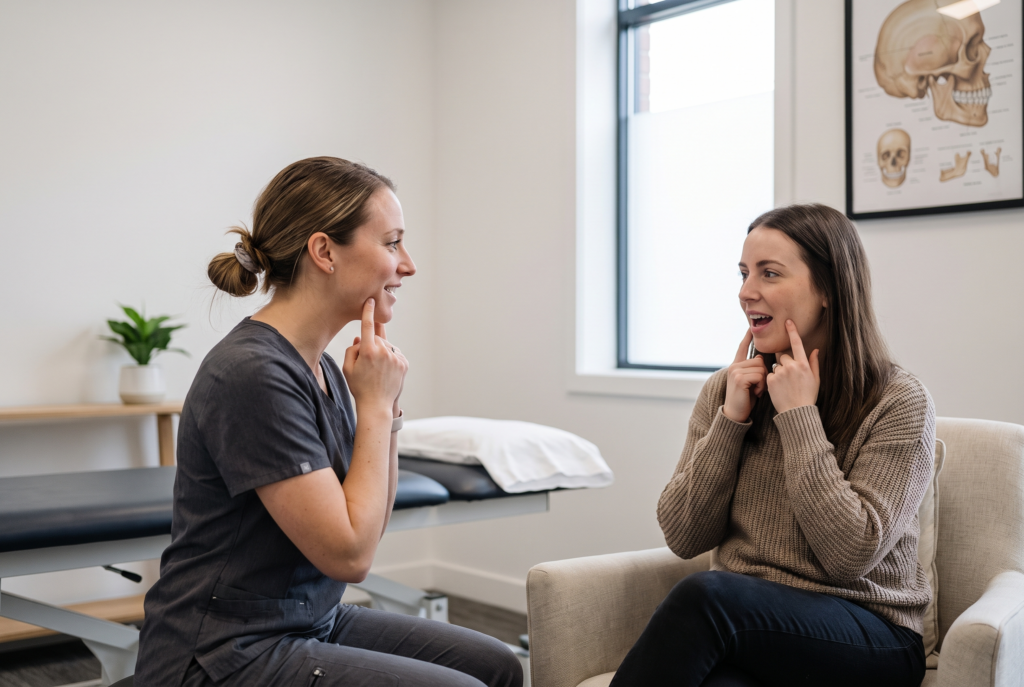
TMJ physical therapy exercises work by stretching and strengthening the muscles around the jaw while correcting the postural patterns that place ongoing strain on it. These aren’t generic stretches, they’re targeted movements built around what an evaluation identifies as the specific contributing factors.
Common components include gentle jaw stretches, controlled jaw-realignment movements, and posture correction work, since forward head posture is a frequent contributor to added jaw strain. Consistency matters here: exercises performed occasionally tend to produce limited, short-lived results, while a daily home routine paired with in-clinic manual therapy supports more lasting change.
See how our related TMJ conditions connect to treatment.
Does Treating TMJ Physical Therapy Really Work?
Yes, for most patients, physical therapy meaningfully reduces TMJ pain and improves jaw function, and this is supported by clinical research showing improvements in pain, range of motion, and related symptoms like headaches and neck tension. It’s a non-invasive, evidence-based first-line option before considering surgery or long-term medication.
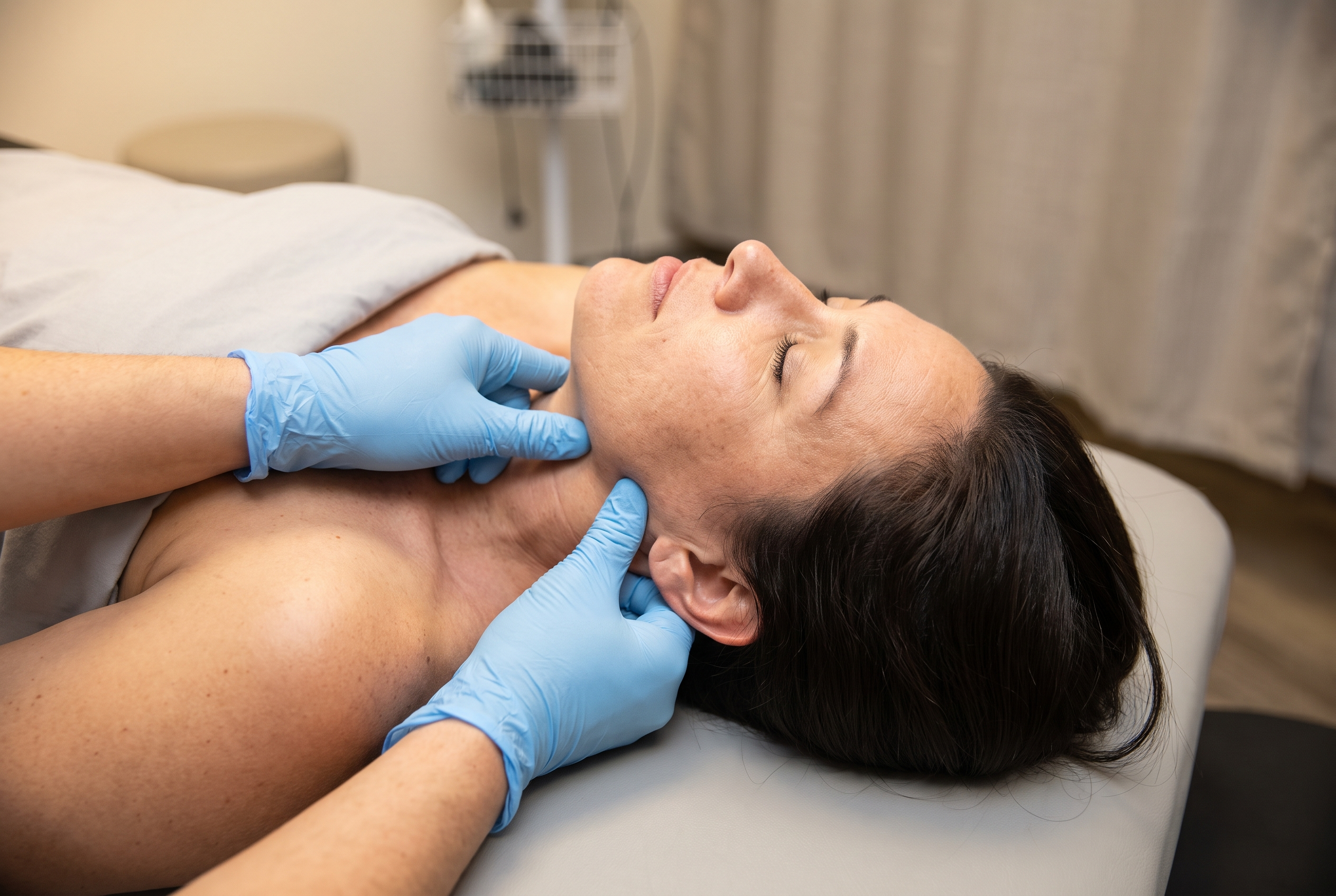
Treatment typically combines manual therapy, myofascial release, and dry needling to address muscle tension directly at its source. Many patients notice a reduction in pain and improved jaw mobility within the first few weeks of consistent treatment, though the exact timeline depends on how long symptoms have been present and how involved the underlying cause is.
The Benefits of TMJ Pain Treatment for Long-Term Management
The benefits of TMJ pain treatment extend beyond immediate pain relief to include restored ability to chew, speak, and move the jaw comfortably day to day. Addressing root causes, rather than only masking symptoms, is what supports results that hold up over time.
TMJ pain management through physical therapy typically focuses on identifying and correcting contributing factors like postural imbalance, muscle tension, or jaw misalignment patterns, rather than treating each flare-up as an isolated event. This approach helps reduce how often symptoms return, not just how they feel in the moment. Ready to start treatment? Contact our Pembroke Pines office.
How Effective Is TMJ Pain Treatment Through Physical Therapy?
Effectiveness varies based on the severity of the underlying condition, consistency with the treatment plan, and whether contributing factors like posture or neck tension are addressed alongside the jaw itself. Patients who stay consistent with home exercises alongside clinic visits tend to see the most reliable results.
Some patients notice improvement within a few sessions, while others with more involved or longer-standing symptoms need a longer course of care. In many cases, effective physical therapy reduces or eliminates the need for more invasive interventions like injections or surgery, making it a reasonable first step for most patients dealing with TMJ pain.
TMJ Pain Treatment: Physical Therapy vs. Other Approaches
| Approach | Addresses Root Cause | Non-Invasive | Ongoing Symptom Prevention | Typical Use Case |
| Specialized TMJ Physical Therapy | Yes | Yes | Yes | First-line, muscle/joint-driven pain |
| General Physical Therapy | Partial | Yes | Partial | Mild, non-specialized cases |
| Injections | No (symptom-focused) | Partial | No | Severe, treatment-resistant cases |
| Surgery | Yes (structural cases) | No | Varies | Severe structural cases only |
What to Expect From a TMJ Physical Therapist
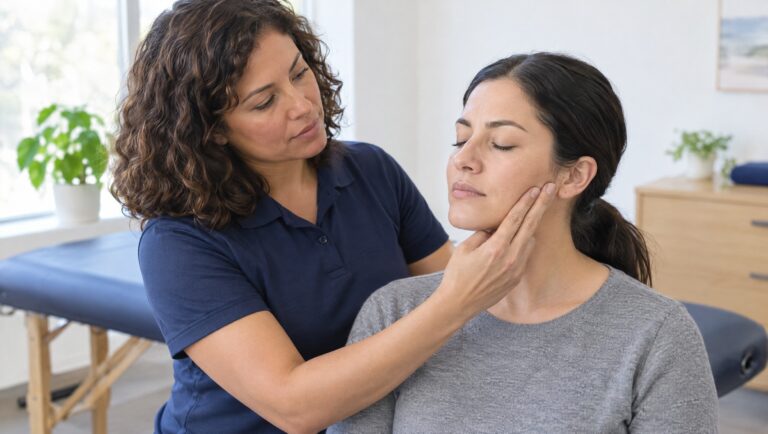
A first visit with a TMJ physical therapist typically includes a thorough evaluation of jaw movement, muscle tenderness, and posture to identify what’s driving your specific symptoms. This evaluation shapes the entire treatment plan rather than defaulting to a standard protocol.
From there, expect a combination of manual therapy, targeted exercises, and modalities like dry needling based on what the evaluation reveals, along with a home exercise routine to support progress between visits. Ongoing check-ins allow the plan to be adjusted as your symptoms and jaw function change over the course of treatment.
If TMJ pain has been part of your routine for weeks or longer, a focused evaluation can clarify what treatment can realistically achieve for your specific case. Dr. Evelyn Mora, PT, DPT, provides personalized, non-surgical TMJ treatment in Pembroke Pines, FL, at Florida TMJ Physical Therapy Center. Schedule your TMJ evaluation today and find out what’s actually driving your symptoms.
TMJ Physical Therapy in Pembroke Pines
If you’ve been told your scans look normal but your jaw still hurts, you’re in the right place. TMJ and craniofacial pain is the entire focus of this practice, not one condition among many, and Dr. Evelyn Mora builds every plan around what your evaluation actually finds, manual therapy, targeted exercise, and the modalities that fit your case, all without surgery. We’d like to hear what’s going on.
Frequently Asked Questions About TMJ Pain Treatment
Not for every patient. TMJ pain treatment can significantly reduce or resolve symptoms for many people, especially muscle-driven cases, but structural joint issues may require ongoing management rather than a one-time fix.
Many patients notice improvement within a few weeks of consistent treatment, though timelines vary based on symptom severity and how long the condition has been present. An evaluation gives a more specific estimate.
Home exercises support treatment but work best alongside professional evaluation and manual therapy, since some muscle groups involved in TMJ pain, particularly deeper jaw muscles, aren’t reachable through self-directed stretching alone.
Treatment often refers to addressing the underlying cause directly, while management describes ongoing strategies to control symptoms and prevent flare-ups. Physical therapy typically does both, depending on what the evaluation identifies.
Coverage varies by plan and provider. Patients are encouraged to call our office so our team can help verify benefits specific to their insurance.
This is typically considered when conservative treatment hasn’t produced adequate improvement after a reasonable trial period, or when structural joint damage is identified. This decision is made collaboratively with your care team.