How Posture and TMJ Pain Are Connected
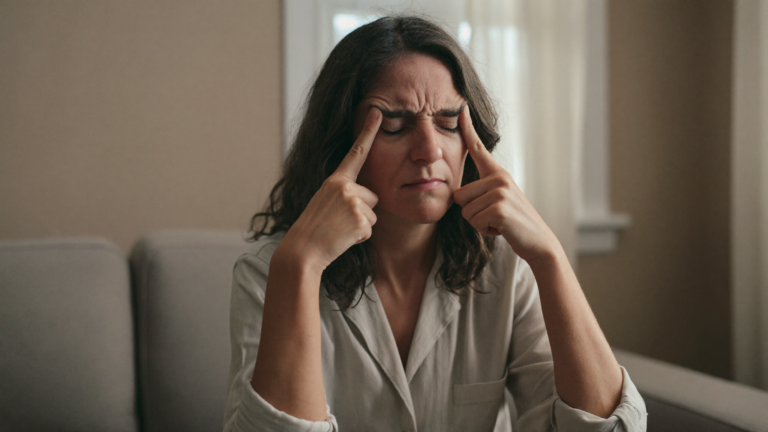
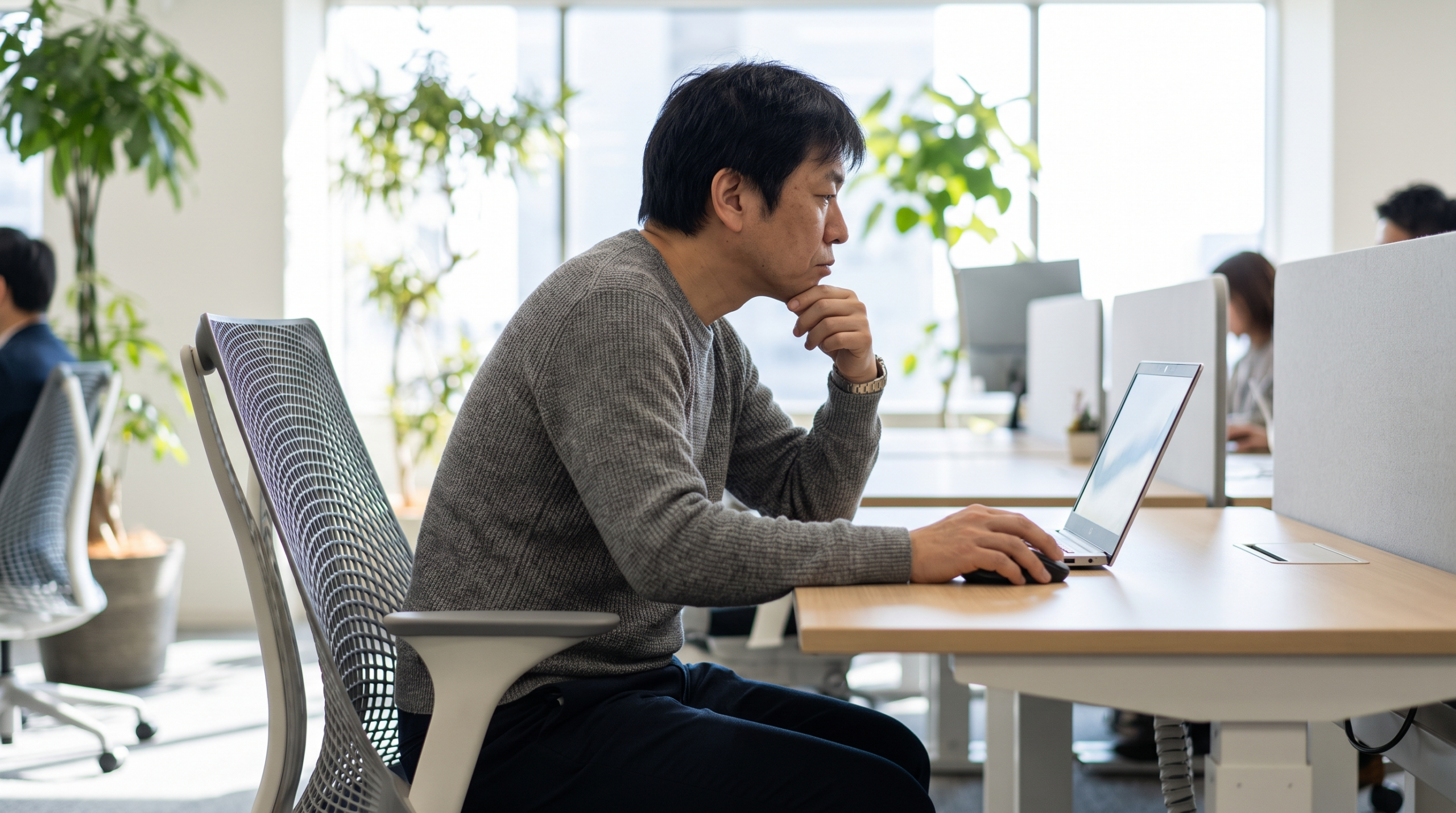
Notice when your jaw hurts most. For a lot of people it is not first thing in the morning and not after a meal. It is around four in the afternoon, after six hours at a laptop, when the jaw feels tight, the temples feel heavy, and clenching has quietly become the default. That timing is a clue. The link between posture and TMJ discomfort is not a vague wellness idea; it is a mechanical one, and it explains why jaw pain so often arrives attached to a stiff neck and aching shoulders rather than on its own. Where your head sits over your shoulders changes what your jaw has to do all day.
TL;DR: Forward head posture and rounded shoulders shift the resting position of the jaw and increase the workload on the muscles that close it, which can drive tightness, clicking, and headaches. Correcting posture will not resolve every case of TMJ pain, but it removes a constant load that keeps other treatment from holding. Which postural pattern is contributing, and how much, is something an evaluation identifies specifically.
Could Poor Posture Be Behind Your Jaw Pain?
Poor posture contributes to jaw pain by changing where the head sits relative to the shoulders, which alters the resting length and workload of the muscles connecting the skull, jaw, and neck. It is rarely the only cause of TMJ symptoms, but it is one of the most common ongoing contributors, and one of the most modifiable.
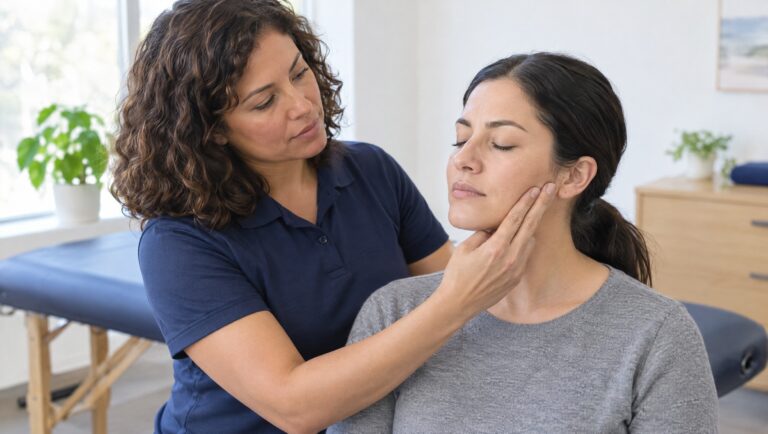
Dr. Evelyn Mora, PT, DPT, screens posture in every TMJ evaluation for a specific reason: it is the factor most likely to still be present after treatment ends. A trigger point can be released and a joint can be mobilized, but if the patient returns to eight hours a day with the head jutting forward toward a monitor, the same tissues get reloaded within a week. Treating the jaw without addressing the posture underneath it tends to produce relief that keeps expiring.
Understanding the Link Between Posture and TMJ
The link between posture and TMJ function comes down to the muscles that connect the jaw to the neck and shoulder girdle. When the head translates forward, the suprahyoid and infrahyoid muscles below the jaw are put under tension, which pulls the mandible down and back and forces the closing muscles to work harder just to keep the mouth shut.
The load is not trivial. Cervical extensors carry a sharply increasing burden as the head moves forward of the shoulders, and those same extensor muscles share fascial and neural connections with the jaw. Add the trigeminocervical convergence at C1 through C3, where neck and jaw sensory input arrive at the same relay, and the overlap between neck complaints and jaw complaints stops looking like coincidence.
Three patterns show up most consistently in the clinic:
Forward head posture, where the ears sit well ahead of the shoulders, is the most common. Rounded shoulders and a rotated shoulder blade position reduce the stability the neck relies on, so the neck compensates. Tight, overworked upper neck muscles then keep referring tension into the temples and jaw. Patients with these patterns frequently also report the headaches, ear fullness, and neck stiffness that travel with TMJ disorders.
How Common Postural Patterns Load the Jaw
| Postural Pattern | What Happens Mechanically | What Patients Usually Notice |
|---|---|---|
| Forward head posture | Suprahyoid tension pulls the mandible down and back; closing muscles work harder at rest | Afternoon jaw tightness, temple pressure |
| Rounded shoulders | Reduced scapular stability increases upper cervical load | Neck and upper back ache alongside jaw pain |
| Tight upper neck muscles | Referred tension into temporalis and masseter via cervical convergence | Headaches at the temples or skull base |
| Stomach sleeping | Cervical rotation loads one temporomandibular joint asymmetrically for hours | One-sided morning soreness or clicking |
How to Improve Poor Posture for TMJ Relief
To improve poor posture in a way that actually helps the jaw, the goal is not sitting rigidly upright. It is reducing how long the head spends forward of the shoulders and restoring the mobility and strength needed to hold a neutral position without effort. Small, frequent position changes generally do more than one perfect posture held briefly.
The practical starting points are unglamorous and effective. Raise the monitor so the top third of the screen sits at eye level, which removes the reason to crane forward. Bring the phone up toward the face instead of dropping the chin to it. Set a reminder to change position every thirty to forty minutes, because the tissue load comes from duration more than from any single position. And check the sleep setup, since stomach sleeping rotates the neck and presses one side of the jaw into the pillow for hours at a stretch.
What these adjustments cannot do on their own is restore mobility that has already been lost, or strengthen muscles that have stopped participating. That is where structured posture correction as part of TMJ therapy comes in.
Posture Correction: Treating the Jaw Beyond the Jaw
Head and spinal alignment have a real influence on how hard your jaw muscles have to work all day. Our posture correction program pairs targeted exercise with practical ergonomic guidance for your desk, your phone, and your sleep position, so the jaw isn’t carrying the strain of everything above and below it. Come see what your evaluation reveals.
TMJ Posture Correction Techniques We Use in Therapy
TMJ posture correction in physical therapy combines hands-on work to restore neck and thoracic mobility, strengthening for the deep neck flexors and shoulder blade stabilizers, and retraining so a neutral head position becomes the default rather than something the patient has to remember.
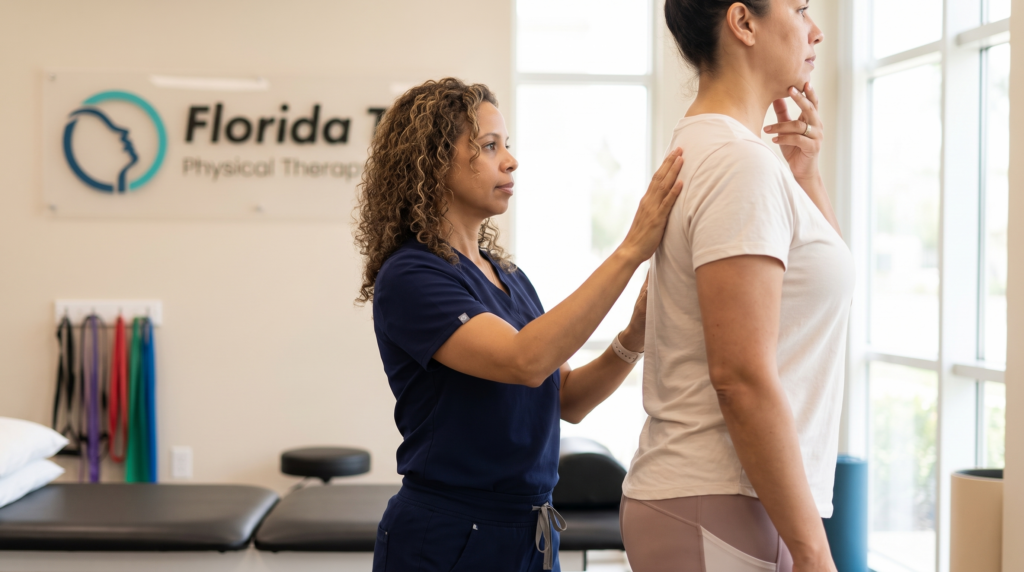
The sequence matters. Strengthening a neutral position that a patient cannot comfortably reach is frustrating and unproductive, so restricted upper cervical and mid-back segments are mobilized first. Then the deep neck flexors, the muscles that hold the head back over the shoulders, are trained specifically, because they are usually the ones that have gone quiet while the surface muscles took over. Breathing is part of this too. Chronic upper-chest breathing recruits the neck accessory muscles hundreds of times an hour, which keeps the whole region loaded.
Alongside this, jaw-specific work continues. Posture correction reduces the background load; manual therapy and trigger point work address what has already tightened.
Jaw Alignment Exercises You Can Try at Home
A short daily routine of chin tucks, gentle neck stretching, and jaw relaxation can reduce postural strain on the temporomandibular joint between appointments. These movements are meant to be low-effort and pain-free. If any of them provoke jaw pain, clicking, or headache, they should be stopped and reviewed with a therapist.

Chin tuck. Sitting tall, glide your chin straight back as though making a double chin, keeping your eyes level. Do not nod downward, which is the most common error and trains the wrong muscles entirely. Hold five seconds, repeat ten times, a few times throughout the day.
Upper trapezius stretch. Tilt one ear toward the shoulder without rotating the head, letting the opposite shoulder relax down. Hold twenty to thirty seconds per side.
Jaw resting position. Rest the tip of your tongue lightly on the roof of your mouth just behind your front teeth, let your teeth separate slightly, and keep your lips closed. This is where the jaw is meant to sit at rest. Return to it whenever you notice your teeth touching.
Controlled opening. With the tongue still on the palate, open your mouth slowly about halfway and close it, watching in a mirror that the jaw travels straight rather than veering to one side. Ten slow repetitions.
Living With TMJ Disorders: The Posture-TMJ Connection
Managing TMJ disorders long term means treating posture as a daily variable rather than a one-time fix. The patients who hold their gains are generally the ones who changed their desk setup, their phone habit, and their sleep position, not the ones who simply completed a course of treatment and returned to everything exactly as it was.
That said, posture is a contributor, not the whole explanation. Disc displacement, arthritic change, bruxism, and stress-driven clenching all play their own parts, and some patients have several at once. Sorting out which factors are active, and in what proportion, is the entire purpose of an evaluation. For patients whose main complaint is head pain rather than jaw pain, the five approaches we use for TMJ headache relief cover that side of the picture in more detail.
If your jaw tightens as the day goes on and your neck and shoulders are along for the ride, posture is worth examining properly rather than guessing at. Dr. Evelyn Mora, PT, DPT, provides non-surgical evaluations that assess posture, jaw mechanics, and muscle tension together at Florida TMJ Physical Therapy Center in Pembroke Pines, FL. Schedule your TMJ and posture evaluation and find out which patterns are actually loading your jaw.
Frequently Asked Questions About Posture and TMJ Pain
It can contribute meaningfully, and in some patients it is the dominant factor. Forward head posture increases tension in the muscles below the jaw, which raises the resting workload of the closing muscles. Most cases involve posture alongside clenching, joint changes, or stress.
It varies with how long the pattern has been established and whether jaw-specific treatment is running alongside it. Postural change is a retraining process rather than a quick adjustment, and progress is tracked at follow-up visits rather than predicted in advance.
Not automatically. Standing with the head forward loads the neck and jaw the same way sitting does. What helps is screen height at eye level and changing position regularly, which a sit-stand setup makes easier but does not guarantee on its own.
Because the load is cumulative. Hours of forward head position and low-level clenching build muscle fatigue in the temporalis and masseter, so symptoms peak in the afternoon and evening rather than on waking.
Yes, and mention it at your next visit. Clicking during an exercise usually means the jaw is tracking off its normal path, which is something to correct with guidance rather than push through.
It can. Stomach sleeping rotates the cervical spine and presses one side of the jaw into the pillow for several hours, loading one joint asymmetrically. Patients with one-sided morning symptoms often find their sleep position is part of the picture.