Is a TENS Unit for TMJ Worth Trying? What to Know
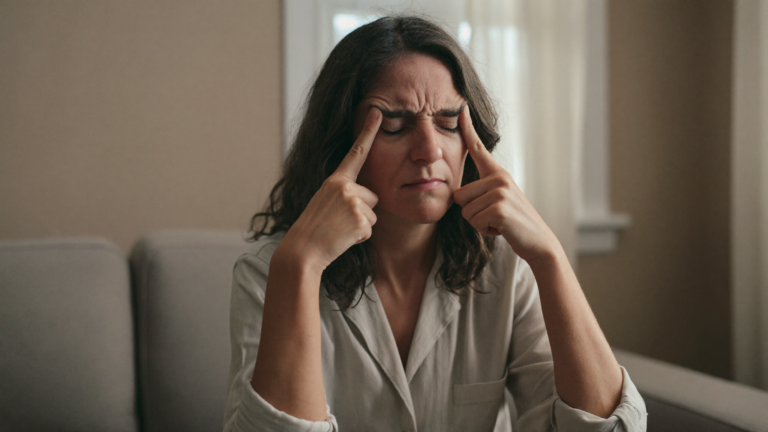
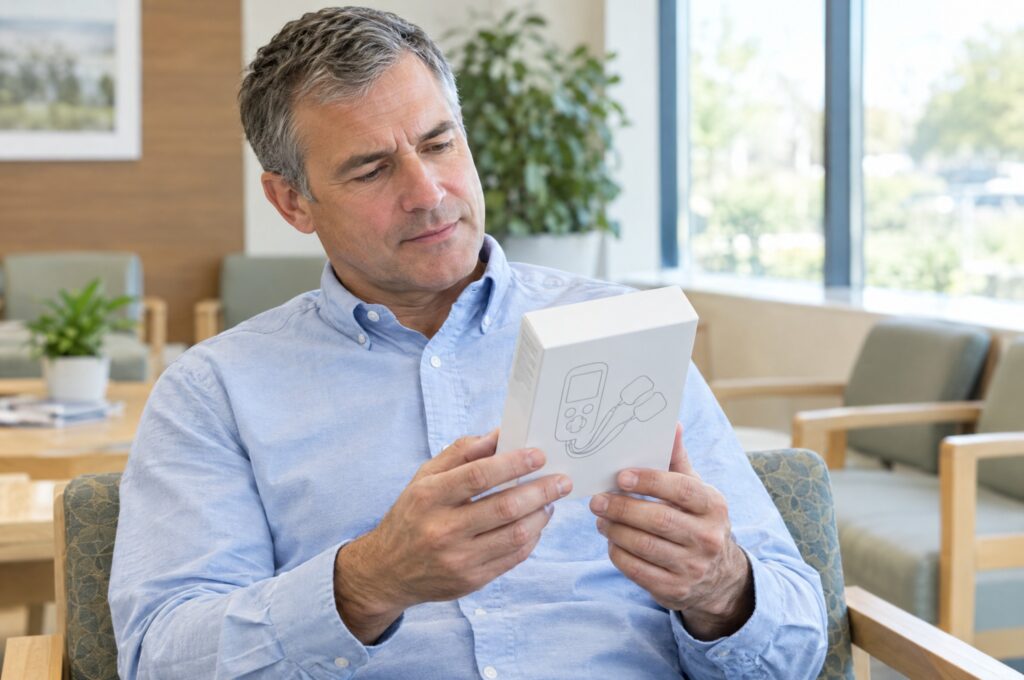
Walk down the health aisle of almost any pharmacy, and you will likely see small TENS devices for sale. The boxes promise drug-free pain relief, and some even show a jaw on the label. If you live with jaw pain, that can sound like an easy fix. So, is a TENS unit for TMJ worth trying? The short answer is that it may help some people manage pain, but it works best as one tool in a larger plan. Here is what to know before you place pads on your face.
TL;DR
- A TENS unit sends mild electrical pulses through the skin to help calm pain signals.
- It may offer short-term comfort for jaw muscle pain, but it does not correct the cause of a TMJ disorder.
- Safe pad placement matters, and some people should not use TENS at all without medical clearance.
- In-clinic electrical stimulation is guided by a therapist and paired with manual therapy and exercise.
- If pain keeps coming back, a full TMJ evaluation can show what is driving it.
Seeing TENS Pads on Store Shelves? Read This First
Home TENS devices are easy to find and fairly low in cost. For that reason, many of our patients try one before they ever call us. Some find it soothing. Others feel no change or find the tingling on the face uncomfortable.
Before you buy one, it helps to know what these devices are and what they are not. A TENS unit can help with how pain feels in the moment. However, it cannot release a locked jaw, change a clenching habit, or fix poor posture.
Dr. Evelyn Mora, PT, DPT, often hears questions about these devices at our Pembroke Pines clinic. Her view is practical. A home unit may be a helpful add-on for some people, especially once they understand their diagnosis. On its own, though, it rarely tells the whole story.
How a TENS Unit for TMJ Works on Jaw Pain Signals
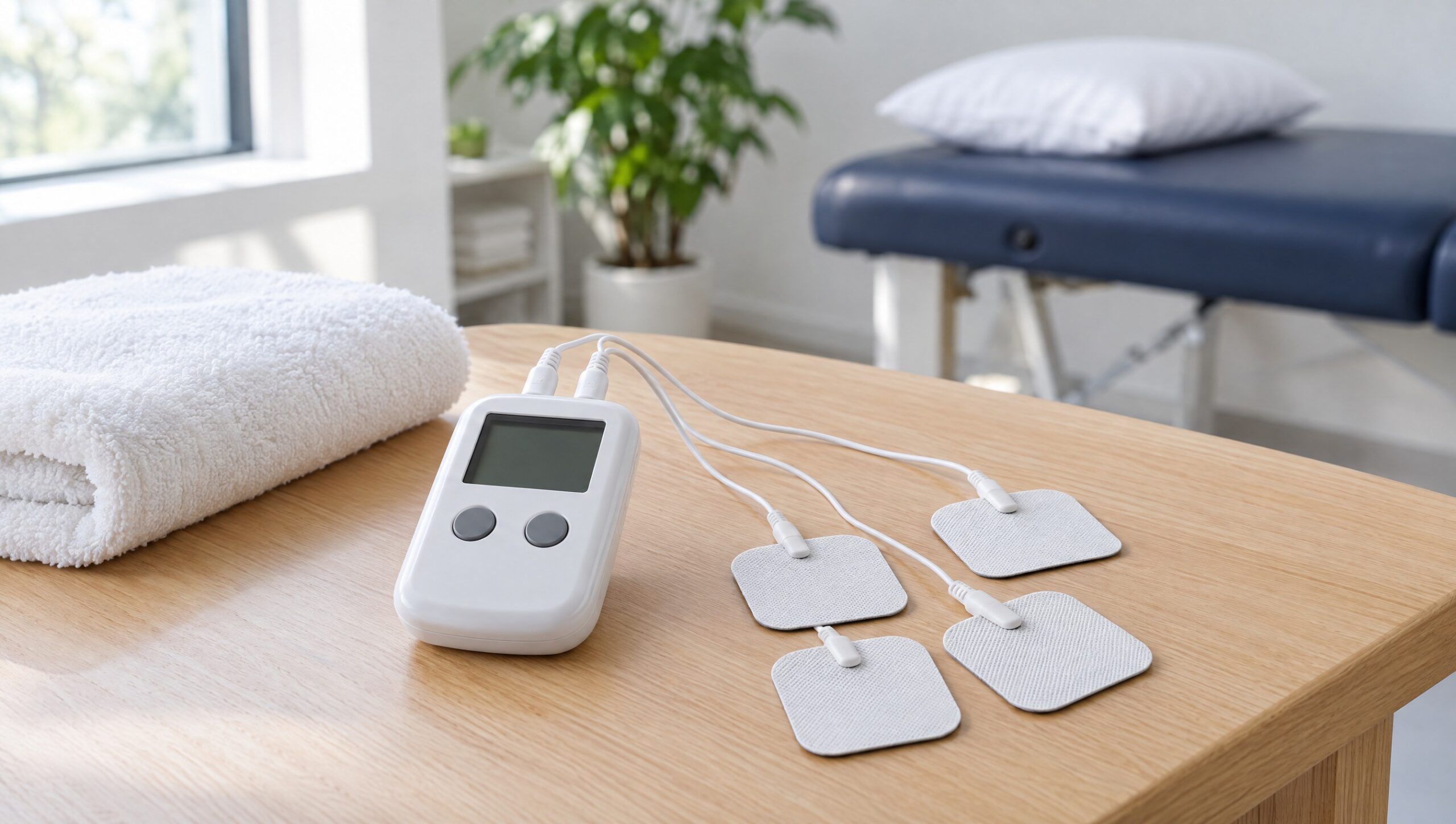
TENS stands for transcutaneous electrical nerve stimulation. “Transcutaneous” simply means “through the skin.” The device sends mild electrical pulses through sticky pads placed near the sore area.
These pulses are thought to work in two main ways. First, they may “close the gate” on pain signals moving toward the brain. Your nerves can only carry so much at once, so the tingling may crowd out some of the pain. Second, some settings may encourage the body to release its own natural pain-easing chemicals.
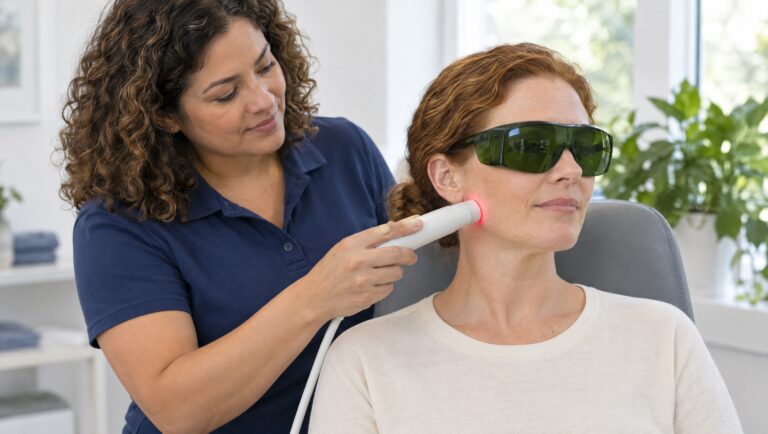
For the jaw, people usually place pads over the masseter or temporalis muscles. These are the large chewing muscles on the cheek and the side of the head. When they are tight and tender, a TENS session may help them feel more relaxed for a while.
Research on TENS for TMJ disorders is mixed. Some studies show short-term pain relief, while others show little difference. Overall, the evidence suggests TENS may help some people as part of care, rather than as a stand-alone treatment.
Using a TENS Machine for TMJ Pain at Home: Safety Basics
A TENS machine for TMJ pain is generally low risk when used the right way. Still, the face and neck are sensitive areas. These basics can help you use one more safely.
Check With a Provider First
Talk with your doctor or physical therapist before you start. Do not use TENS without medical clearance if you:
- Have a pacemaker, defibrillator, or other implanted electronic device
- Are pregnant
- Have epilepsy or a seizure disorder
- Have a heart condition
- Have numbness or reduced feeling on the face
Place the Pads With Care
- Keep pads on the cheek or temple muscles only.
- Never place pads on the front or sides of the neck.
- Keep pads well away from the eyes.
- Avoid broken, irritated, or freshly shaved skin.
- Do not place pads on opposite sides of the head so the current crosses through it.
Keep Sessions Gentle
Start on the lowest setting and turn it up slowly. You should feel a steady tingle, not pain or a strong twitch. Many people use sessions of about 15 to 30 minutes. Also, never use the device while driving, sleeping, or in water.
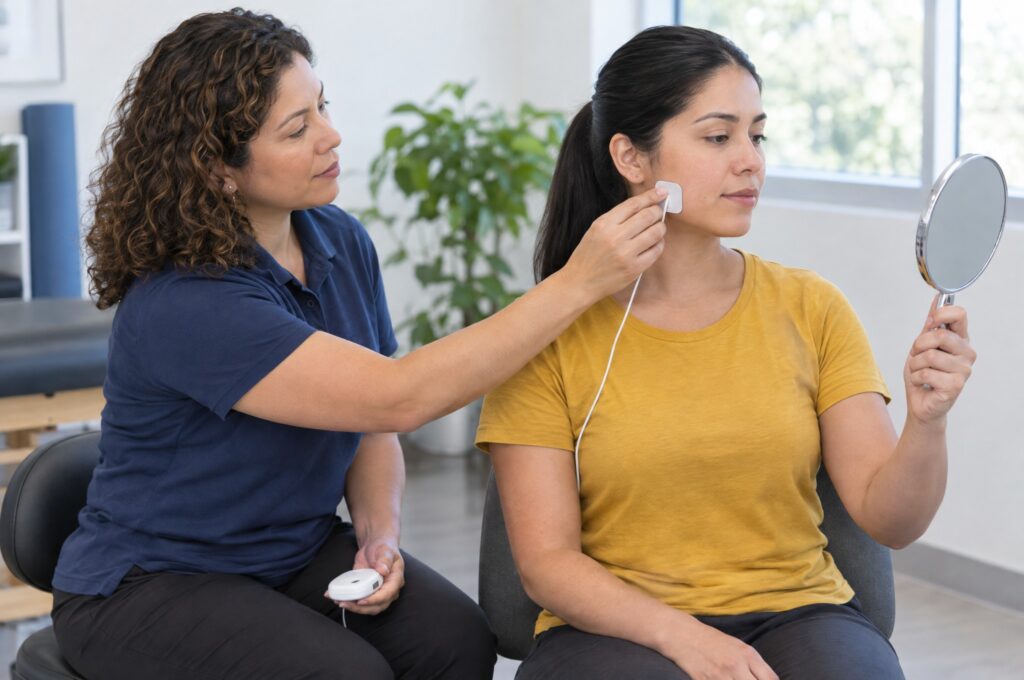
TENS TMJ Muscle Therapy vs. In-Clinic Electrical Stimulation
Home TENS and in-clinic electrical stimulation share the same basic idea. Both use mild current to help manage pain and muscle tension. Even so, the experience and purpose can differ quite a bit.
| Factor | Home TENS Unit | In-Clinic Electrical Stimulation |
| Who sets it up | You, based on the box instructions | A physical therapist, based on your exam |
| Main goal | Short-term pain comfort | Pain relief, muscle relaxation, and support for other treatment |
| Settings | Basic preset programs | Adjusted to your muscles and response |
| Pad placement | Self-guided | Chosen and checked by the therapist |
| What comes with it | Usually nothing else | Manual therapy, exercise, posture work, and education |
TENS TMJ muscle therapy at home can be a useful bridge between visits. In the clinic, however, we use electrical stimulation as one step within a session. For example, it may come before hands-on work to help the muscles relax. It can also follow exercise to calm any soreness.
That pairing matters. When a modality supports other care, it has a clear role. When it stands alone, its effect often fades once the device is off.
Where TENS Unit for TMJ Treatment Fits in a Full Care Plan
At our clinic, every plan begins with an evaluation. Dr. Mora checks how your jaw moves, how your neck and posture affect it, and which muscles hold tension. She then chooses the tools that make sense for you. You can see the full range on our services page.
TENS unit for TMJ treatment may fit into that plan in a few ways:
- As a home tool for flare-ups, once you know safe placement
- As a way to ease pain enough to do your jaw exercises
- As short-term support while other treatment takes effect
Other parts of care often do more of the heavy lifting. Manual therapy can help the jaw joint and muscles move more freely. Targeted exercises build better control. Posture work eases strain from the neck. Our guide on how physical therapy for jaw pain works explains each step in more detail.
In short, a TENS unit can support the plan. It just should not replace it.

When a Home Device Is Not Enough
A TENS unit may take the edge off. Yet there are times when it is clearly not enough. Consider a full evaluation if you notice:
- Jaw pain that returns as soon as you stop using the device
- Clicking, popping, or a jaw that catches or locks
- Trouble opening your mouth wide or chewing
- Headaches, ear pain, or neck pain that seem tied to the jaw
- Needing the device more and more often
These signs suggest something is still driving the pain. A TMJ-focused exam can help find what that is.
Florida TMJ Physical Therapy Center treats TMJ and craniofacial pain exclusively. Dr. Mora brings over 10 years of clinical experience, including 8 years at Memorial Hospital West, plus specialized TMJ training. We take time to explain what we find and how each tool fits.
If you are in Pembroke Pines or nearby in West Broward, we would be happy to help. Call (954) 636-5760 or reach out to our team to book your visit.
Electrical Stimulation for Jaw Muscle Relief
Muscles that guard around a painful joint tend to stay switched on, which keeps the discomfort going. Electrical stimulation is a non-invasive way to encourage those muscles to relax, improve circulation, and help manage pain between sessions of hands-on care. It’s one piece of the individualized plan we build for each patient.
Frequently Asked Questions
Many people can use TENS on the jaw muscles with care. Keep pads on the cheek or temple, away from the eyes and neck. Check with your provider first, especially if you have an implanted device or a heart condition.
Pads usually go over the masseter muscle on the cheek or the temporalis muscle on the side of the head. A physical therapist can show you the best spots for your pain pattern.
Many people use sessions of about 15 to 30 minutes. Your therapist can suggest a schedule that fits your needs. Stop if your skin becomes irritated or the pain increases.
They are related but not the same. In-clinic electrical stimulation is set up by a therapist and paired with other treatments. A home TENS unit is self-guided and mainly aimed at short-term comfort.
No. A TENS unit may help manage pain, but it does not address the joint, muscle, or habit factors behind a TMJ disorder. It works best alongside a full care plan.
Coverage varies by plan. Please call our office so our team can help you check your benefits for in-clinic care.