Red Light Therapy for TMJ: What It Can and Cannot Do
“Should I buy one of those red light masks?” It is one of the most common questions we hear from new patients. Social media is full of glowing panels, face masks, and wands that claim to ease pain and inflammation. Some people with jaw pain buy one and feel a little better. Others notice nothing. Red light therapy for TMJ has real science behind it, but the details matter a great deal. This article sorts out what light-based care is designed to do, where its limits are, and how it fits into a complete plan.
TL;DR
- Red light therapy uses low levels of red or near-infrared light to support tissue repair and help manage pain.
- Studies on light therapy for TMJ show some promise for short-term pain relief, though results vary.
- In-clinic cold laser therapy and home red light panels differ in strength, focus, and guidance.
- TMJ laser surgery is a separate surgical procedure and is not the same as light therapy.
- Light therapy works best as one part of a plan that also includes manual therapy, exercise, and posture work.
The At-Home Light Device Trend: What Patients Ask Us
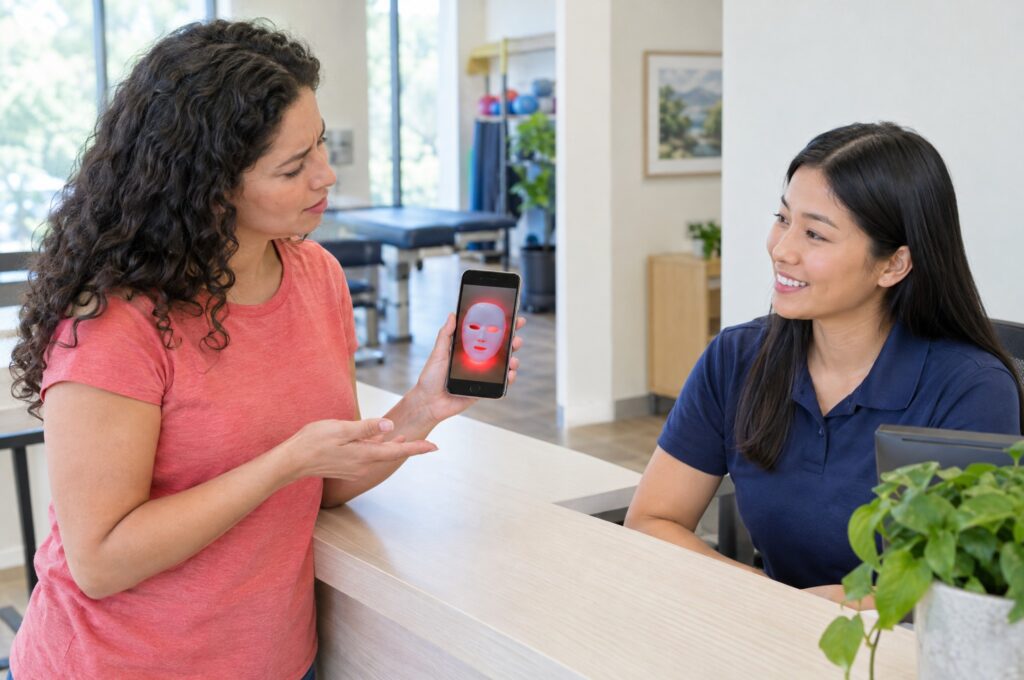
Home light devices have become very popular. You can find them in many shapes, from full-face masks to handheld wands. Prices range from fairly low to quite high.
Patients usually ask us three things. Does it work? Is it safe? And can it replace in-clinic treatment? Those are fair questions, and the answers take a little explaining.
Dr. Evelyn Mora, PT, DPT, uses low-level laser therapy as part of TMJ care at our Pembroke Pines clinic. Because of that, she understands both the promise and the limits of light-based treatment. In her view, the device is rarely the whole answer. Instead, it can support other care that targets the cause of jaw pain.
Before buying a home device, it helps to understand how light therapy is meant to work. That way, you can set realistic goals.
How Red Light Therapy for TMJ Is Designed to Work
Red light therapy is also known as photobiomodulation. That long word simply means using light to influence how cells behave. The light used is low in energy, so it does not burn or cut tissue.
When red or near-infrared light reaches the cells, it is thought to support their energy production. In turn, this may help reduce inflammation, ease pain, and support tissue repair. Near-infrared light reaches deeper than visible red light. For that reason, many clinical devices use near-infrared wavelengths to reach the jaw joint and muscles.
Research on light therapy for TMJ disorders has grown in recent years. Several reviews suggest it may help reduce jaw pain in the short term. However, studies use many different devices, doses, and schedules. As a result, it is hard to say exactly which approach works best.
What light therapy does not do is also important. It does not realign the jaw, stop clenching, or change posture. It also cannot fix a disc that clicks or catches on its own.
Cold Laser Therapy TMJ Sessions vs. Home Red Light Panels
Cold laser therapy and home red light panels both use low-level light. Even so, they differ in a few key ways.
Strength and Focus
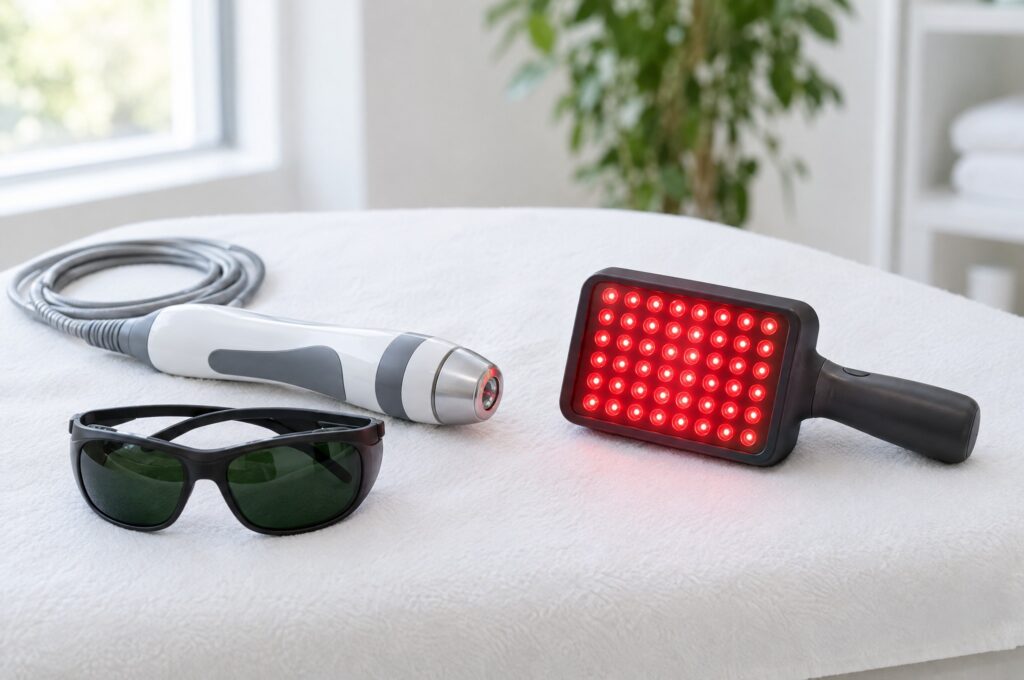
Cold laser therapy TMJ devices used in clinics often deliver a more focused beam. The therapist aims it at specific points on the jaw joint and tender muscles. Home panels and masks usually spread lower-power light over a broad area. That light may not reach deep tissue in the same way.
Dose and Timing
In a clinic, the therapist chooses the dose based on the area being treated. Home devices rely on general instructions. Since the right dose matters in light therapy, more is not always better.
Guidance and Safety
A therapist checks your skin, uses eye protection, and watches how you respond. At home, you are on your own. Eye safety is a real concern with bright light near the face. Always follow the device instructions and protect your eyes.
Cost and Convenience
Home devices are convenient and can be used often. On the other hand, quality varies widely between brands. If you choose to try one, talk with your provider first about how it fits your care.
What Happens During TMJ Laser Treatment at Our Clinic
Your first visit starts with a full evaluation, not a device. Dr. Mora looks at jaw movement, joint sounds, muscle tenderness, neck posture, and daily habits. She then decides whether laser therapy makes sense for you.
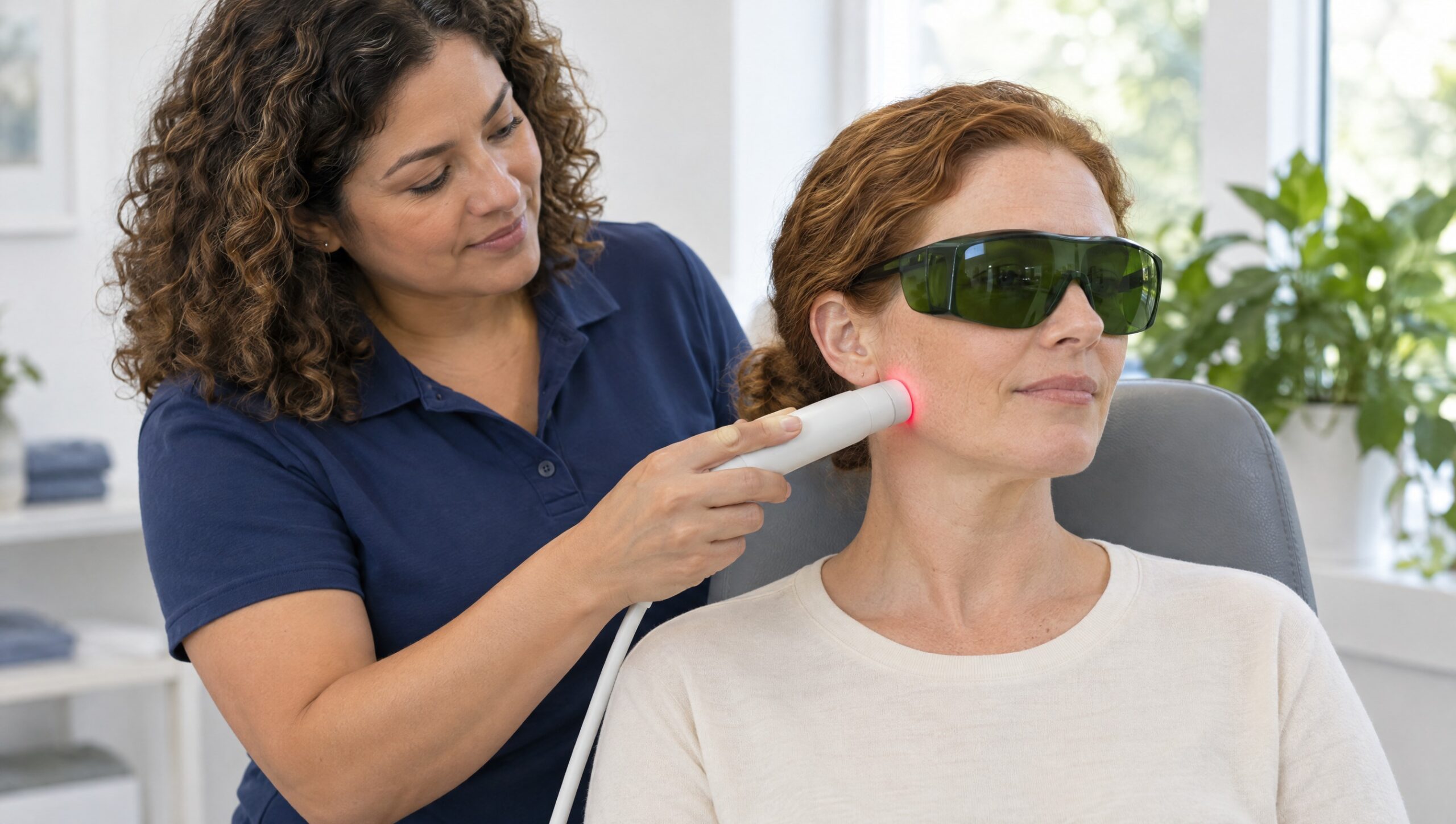
If it does, TMJ laser treatment is simple and quiet. Here is what it often looks like:
- You sit or lie down in a comfortable position.
- You wear protective eyewear for the full session.
- The therapist holds a small probe near the jaw joint or sore muscles.
- Each area gets a short, measured dose of light.
Most people feel little or nothing during the session. Some notice a mild sense of warmth. The light treatment itself often takes only a few minutes.
After that, the rest of the session continues. Laser therapy is usually paired with manual therapy, jaw exercises, or posture work. In this way, the light may help calm pain so the other steps feel easier.
TMJ Laser Surgery Is Not the Same Thing
Some people search for TMJ laser surgery and assume it is the same as light therapy. It is not. The two have very different goals and risks.
TMJ laser surgery refers to surgical procedures done by an oral and maxillofacial surgeon. In some cases, surgeons use a laser as a tool during joint procedures. These are invasive treatments, and they are usually considered only after other options have been tried.
Red light therapy and cold laser therapy are non-invasive. Nothing cuts or enters the body. You walk in and walk out with no recovery time.
Our practice follows a conservative, non-surgical approach. Even so, we work closely with dentists and oral surgeons across South Florida. If surgery is ever a question for you, your surgeon is the right person to discuss it with. We can also support recovery after jaw surgery when your surgeon refers you.

Who May Benefit and What Else Belongs in the Plan
Light therapy may be a good fit for people with jaw muscle pain, joint soreness, or tenderness after overuse. It may also help some patients feel more comfortable during the early part of care. Still, it is not right for everyone. Your therapist will review your health history first.
Light therapy rarely works alone in our clinic. A full plan often includes:
- Manual therapy to ease tight muscles and improve joint motion
- Jaw exercises to build control and reduce strain
- Posture correction to take pressure off the jaw and neck
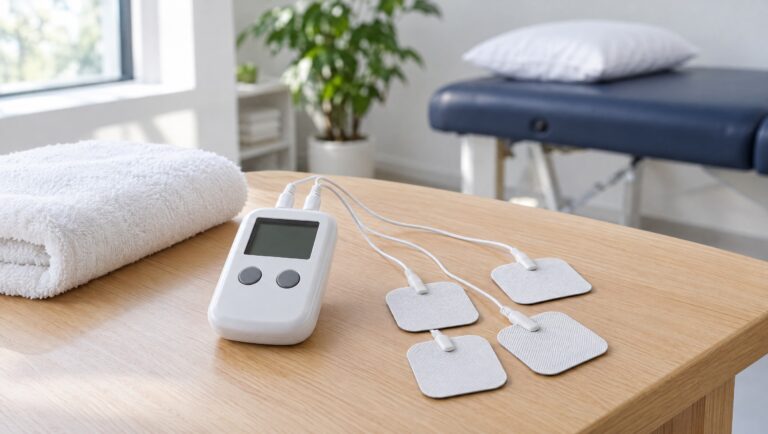
- Dry needling, ultrasound therapy, or electrical stimulation when they fit
- Simple habit changes, such as noticing daytime clenching
You can see all of our options on the services page. For a closer look at how these steps work together, read about how TMJ disorder treatment eases facial pain.
Florida TMJ Physical Therapy Center focuses only on TMJ and craniofacial pain. Dr. Mora has over 10 years of clinical experience, including 8 years at Memorial Hospital West, and specialized training in TMJ disorders. We keep things personal and take time with every patient.
If you are curious whether light therapy could help your jaw, call (954) 636-5760 or contact our Pembroke Pines office to schedule an evaluation.
Laser Therapy for Jaw Pain and Inflammation
Low-level laser therapy is applied directly over the temporomandibular joint to help calm pain and inflammation and support tissue healing. It’s gentle, non-invasive, and typically used in combination with the other parts of your treatment plan rather than on its own. Our team in Pembroke Pines can walk you through what to expect.
Frequently Asked Questions
It may help some people manage jaw pain in the short term. Research is promising but mixed. It tends to work best as part of a plan that includes manual therapy and exercise.
They are closely related. Both use low-level light to support tissue and ease pain. Cold laser devices in a clinic are usually more focused and are dosed by a trained provider.
Most people feel nothing or only mild warmth. There is no cutting, and you can return to normal activity right after your session.
Some people do. Talk with your provider first, follow the device instructions, and always protect your eyes. A home device should not replace a proper evaluation if pain persists.
TMJ laser treatment is a non-invasive light therapy. TMJ laser surgery is a surgical procedure done by an oral surgeon. They are completely different types of care.
This depends on your condition and how you respond. Your therapist will suggest a plan after your evaluation and adjust it as you go.